

Hey there! As a supplier of Globe Valves, I often get asked about how these valves work, especially their sealing mechanism. So, I thought I'd write this blog to break it down for you in a simple way.
First off, let's understand what a Globe Valve is. A Globe Valve is a type of valve used for regulating flow in a pipeline. It's named so because of its spherical body shape. These valves are super common in various industries like oil and gas, water treatment, and power generation.
Now, let's dive into the sealing mechanism. The main parts involved in the sealing of a Globe Valve are the valve seat and the disk. The valve seat is a ring - shaped component that's fixed inside the valve body. It provides a surface for the disk to press against when the valve is closed.
The disk, on the other hand, is the moving part. When you turn the valve stem (either manually or using an actuator), the disk moves up and down. When you want to stop the flow, you turn the stem in a way that makes the disk move down towards the valve seat. As the disk gets closer to the seat, it starts to make contact.
The sealing in a Globe Valve works on the principle of a tight fit between the disk and the seat. When the disk fully touches the seat, it creates a barrier that prevents the fluid from flowing through the valve. This tight fit is crucial for effective sealing.
There are different types of disk - seat combinations, and they can affect the sealing performance. For example, there are flat - faced disks that are used for general - purpose applications. These flat disks provide a simple and reliable seal when they come in contact with a flat seat.

Then, there are beveled or conical - faced disks. These are great for applications where a more precise and tight seal is required. The beveled or conical shape allows for a better alignment with the seat, reducing the chances of leakage.
Another factor that influences the sealing mechanism is the material of the disk and the seat. Different materials have different properties. For instance, metal - to - metal sealing is often used in high - temperature and high - pressure applications. Metals like stainless steel or alloy steel can withstand the harsh conditions and provide a durable seal.
However, for applications where a more flexible seal is needed, soft - seated materials are used. Materials like rubber or PTFE (polytetrafluoroethylene) can conform to the surface irregularities of the seat, creating a tight seal even at lower pressures.
Let's talk about how the sealing mechanism affects the performance of the Globe Valve. A good seal is essential for preventing leakage. Leakage can lead to a lot of problems, such as loss of fluid, which can be costly in industries where the fluid is expensive or hazardous. It can also cause environmental issues if the fluid is released into the environment.
Moreover, a proper seal ensures accurate flow control. When the valve is closed, there should be no flow, and when it's open, the flow should be regulated precisely according to the position of the disk. This is crucial for processes that require a specific flow rate.
Now, compared to other types of valves, like the Gate Valve and the Forged check Valve, the Globe Valve has its own advantages when it comes to sealing. Gate Valves are mainly used for on - off applications and are not as good at regulating flow as Globe Valves. Their sealing mechanism is more about the gate sliding into the seat, which may not provide as tight a seal for flow regulation.
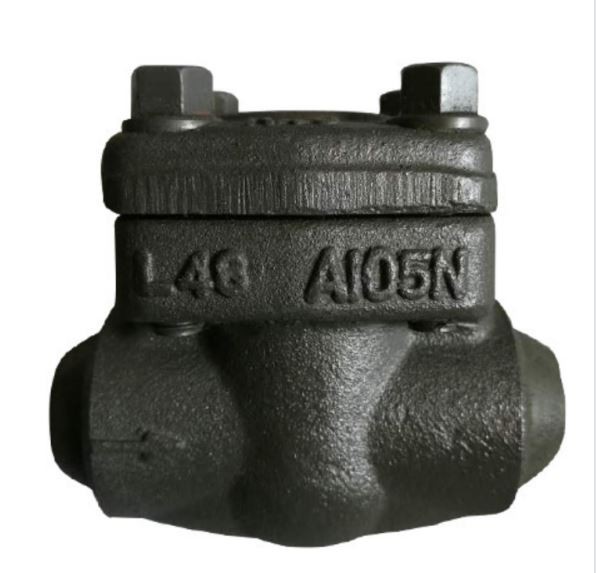
Forged check Valves, on the other hand, are designed to allow flow in one direction only. Their sealing mechanism is focused on preventing backflow, and they are not used for regulating the flow like Globe Valves.
In the manufacturing process of Globe Valves, a lot of attention is paid to the sealing mechanism. We use advanced machining techniques to ensure that the disk and the seat have the right dimensions and surface finish. This helps in achieving a better seal.
Quality control is also a big part of it. We test each valve to make sure that the sealing is up to the mark. We use pressure tests and leak detection methods to check if there are any leaks. If a valve fails the test, it goes through re - work or is discarded.
Maintenance is another aspect related to the sealing mechanism. Over time, the disk and the seat can wear out due to the constant contact and the flow of fluid. Regular maintenance, like cleaning and inspection, can help in detecting any signs of wear early on. If needed, the disk or the seat can be replaced to restore the sealing performance.
As a Globe Valve supplier, we understand the importance of a good sealing mechanism. We offer a wide range of Globe Valves with different disk - seat combinations and materials to meet the diverse needs of our customers. Whether you're in a small - scale industrial process or a large - scale power plant, we've got the right valve for you.
If you're looking for a reliable Globe Valve for your application, don't hesitate to reach out. We can provide you with detailed information about our products, including their sealing performance. We can also offer advice on the best valve for your specific needs. Contact us to start a discussion about your procurement requirements, and let's find the perfect Globe Valve solution together.
References
- Valve Handbook, 4th Edition, by Tom Seidl
- Industrial Valves: Selection and Sizing, by Henry W. Bergman