

Hey there! As a gate valve supplier, I've had my fair share of questions about the differences between gate valves and globe valves. It's a topic that comes up quite often, especially among those new to the world of valves. So, I thought I'd take the time to break it down for you.
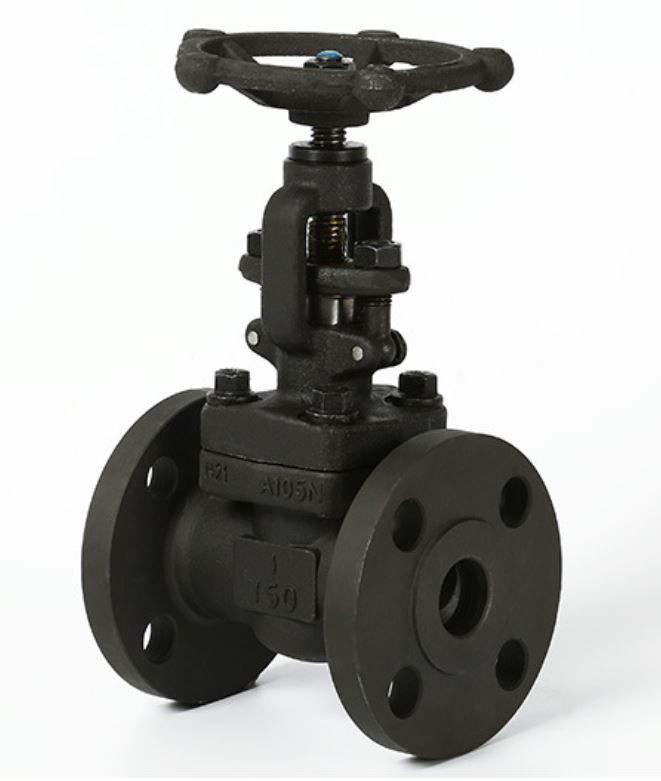
Let's start with the basics. A gate valve, like the ones Gate Valve I supply, is designed to either fully open or fully close a pipeline. It uses a gate, which is typically a flat or wedge-shaped disc, to block or allow the flow of fluid. When the valve is fully open, the gate is completely out of the flow path, offering very little resistance to the fluid. This makes gate valves ideal for applications where a straight-line flow of fluid and minimum flow restriction are required.
On the other hand, a Globe Valve works differently. It has a movable disc-type element and a stationary ring seat in a generally spherical body. The disc moves perpendicular to the seat to control the flow of fluid. Unlike gate valves, globe valves are great for throttling or regulating the flow. You can adjust the position of the disc to control how much fluid passes through the valve.
One of the key differences between the two is their flow characteristics. Gate valves provide a straight-through flow when fully open, which means there's minimal pressure drop. This is crucial in applications where maintaining a consistent flow rate is important, like in large water supply systems or oil pipelines. However, because the gate needs to be fully raised or lowered, gate valves aren't the best for regulating flow. Trying to use a gate valve for throttling can cause the gate to vibrate and damage the valve over time.
Globe valves, on the other hand, are specifically designed for flow regulation. The shape of the valve body and the way the disc moves allow for precise control of the flow rate. But this comes at a cost. The design of globe valves causes a higher pressure drop compared to gate valves, even when fully open. This means more energy is needed to push the fluid through the valve, which can increase operating costs in the long run.
Another difference lies in their construction and maintenance. Gate valves are relatively simple in design, with fewer moving parts. This makes them less prone to mechanical failure and easier to maintain. However, the gate can get stuck in the open or closed position, especially if the valve hasn't been used for a long time or if the fluid contains debris. Regular maintenance, such as lubricating the stem and cleaning the valve, can help prevent these issues.
Globe valves, with their more complex design, require more maintenance. The disc and seat need to be inspected regularly for wear and tear, and the packing around the stem needs to be replaced periodically to prevent leaks. But the good news is that because of their design, it's easier to repair a globe valve compared to a gate valve. You can usually replace the disc and seat without having to remove the entire valve from the pipeline.
When it comes to sealing performance, both valves have their strengths. Gate valves provide a tight seal when fully closed, making them suitable for applications where leakage needs to be minimized. However, achieving a perfect seal can be challenging, especially in high-pressure applications. Globe valves, on the other hand, offer excellent sealing performance, even at low pressures. The design of the disc and seat allows for a more precise fit, reducing the chances of leakage.
Now, let's talk about some common applications for each valve. Gate valves are commonly used in applications where on-off control is required, such as in water treatment plants, oil refineries, and power generation facilities. They're also used in pipelines where the flow needs to be stopped completely for maintenance or repair work.
Globe valves, with their flow regulation capabilities, are often used in applications where precise control of the flow rate is needed. This includes heating and cooling systems, chemical processing plants, and pharmaceutical manufacturing. They're also used in applications where the fluid needs to be throttled to maintain a specific pressure or temperature.
If you're in the market for a valve and aren't sure whether a gate valve or a globe valve is right for your application, it's important to consider a few factors. First, think about the type of fluid you'll be handling. Is it a clean fluid or does it contain debris? If it's a dirty fluid, a gate valve might be a better choice because it's less likely to get clogged.
Next, consider the flow requirements. Do you need to fully open or close the pipeline, or do you need to regulate the flow? If you need precise flow control, a globe valve is the way to go. But if you just need on-off control, a gate valve will do the job.
Finally, think about the operating conditions. What's the pressure and temperature of the fluid? How often will the valve be used? These factors can affect the performance and lifespan of the valve, so it's important to choose a valve that can withstand the conditions of your application.
As a gate valve supplier, I'm here to help you make the right choice. Whether you need a gate valve for your pipeline or a globe valve for your process control system, I can provide you with high-quality valves that meet your needs. If you have any questions or need more information, don't hesitate to reach out. We can discuss your specific requirements and find the best valve solution for you.

In conclusion, while both gate valves and globe valves have their uses, they're designed for different applications. Gate valves are great for on-off control and minimizing flow restriction, while globe valves are ideal for flow regulation. By understanding the differences between the two, you can make an informed decision and choose the valve that's right for your project.
If you're interested in learning more about gate valves or have a project that requires our products, feel free to get in touch. We're always happy to have a chat and discuss how we can assist you with your valve needs.
References:
- Valve Handbook, 4th Edition, by J. S. Tuzson
- The Valve World Magazine - Various articles on gate and globe valves