

Calculating the flow rate of an oxygen ball valve is a crucial aspect for many industries that rely on the precise control and measurement of oxygen flow. As a supplier of Oxygen Ball Valve, I understand the importance of accurate flow rate calculations to ensure the efficient and safe operation of various systems. In this blog post, I will guide you through the process of calculating the flow rate of an oxygen ball valve, providing you with the necessary knowledge and tools to make informed decisions for your applications.

Understanding the Basics of Flow Rate
Before delving into the calculation process, it is essential to have a clear understanding of what flow rate means. Flow rate refers to the volume of fluid (in this case, oxygen) that passes through a given point in a system per unit of time. It is typically measured in units such as cubic meters per hour (m³/h), liters per minute (L/min), or standard cubic feet per minute (SCFM). The flow rate of an oxygen ball valve is influenced by several factors, including the valve's size, pressure differential across the valve, and the properties of the oxygen itself.
Factors Affecting Oxygen Flow Rate
Valve Size
The size of the oxygen ball valve plays a significant role in determining the flow rate. Generally, larger valves have a higher flow capacity than smaller ones. This is because a larger valve opening allows more oxygen to pass through the valve in a given period. When selecting an oxygen ball valve, it is crucial to choose a size that can accommodate the required flow rate for your application.
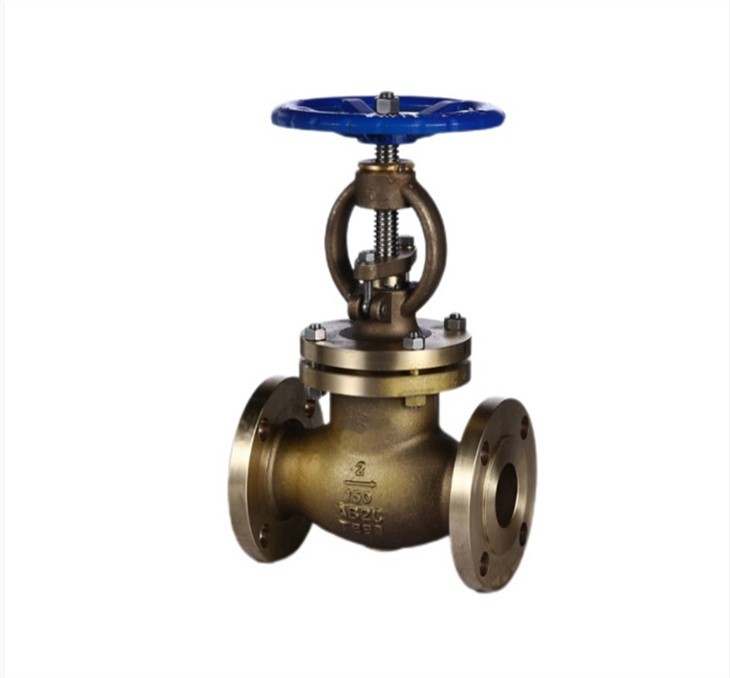
Pressure Differential
The pressure differential across the oxygen ball valve is another critical factor that affects the flow rate. The pressure differential is the difference in pressure between the upstream and downstream sides of the valve. A higher pressure differential typically results in a higher flow rate, as the greater pressure difference provides more force to push the oxygen through the valve.
Oxygen Properties
The properties of the oxygen, such as its density, viscosity, and temperature, can also impact the flow rate. For example, oxygen at a higher temperature will have a lower density, which can result in a higher flow rate for a given pressure differential. Similarly, oxygen with a lower viscosity will flow more easily through the valve, leading to a higher flow rate.
Calculating the Flow Rate of an Oxygen Ball Valve
There are several methods for calculating the flow rate of an oxygen ball valve, each with its own level of complexity and accuracy. One of the most commonly used methods is the use of flow coefficient (Cv) values.
Flow Coefficient (Cv)
The flow coefficient (Cv) is a measure of the valve's capacity to pass fluid. It is defined as the number of US gallons per minute (GPM) of water at 60°F that will flow through the valve with a pressure drop of 1 psi across the valve. The Cv value is a characteristic of the valve and is typically provided by the valve manufacturer.

To calculate the flow rate of an oxygen ball valve using the Cv value, you can use the following formula:
[ Q = C_v \sqrt{\frac{\Delta P}{\rho}} ]
Where:
- ( Q ) is the flow rate in GPM
- ( C_v ) is the flow coefficient of the valve
- ( \Delta P ) is the pressure differential across the valve in psi
- ( \rho ) is the specific gravity of the fluid (for oxygen, the specific gravity is approximately 1.105)
If you prefer to use metric units, you can convert the formula as follows:
[ Q = C_v \sqrt{\frac{\Delta P}{\rho}} \times 0.0283 ]

Where:
- ( Q ) is the flow rate in m³/h
- ( C_v ) is the flow coefficient of the valve
- ( \Delta P ) is the pressure differential across the valve in bar
- ( \rho ) is the specific gravity of the fluid (for oxygen, the specific gravity is approximately 1.105)
Example Calculation
Let's say you have an oxygen ball valve with a Cv value of 10 and a pressure differential of 2 psi across the valve. Using the formula above, you can calculate the flow rate as follows:
[ Q = 10 \sqrt{\frac{2}{1.105}} \approx 13.4 GPM ]
If you want to convert this flow rate to m³/h, you can use the conversion factor:
[ 13.4 GPM \times 0.0283 \approx 0.38 m³/h ]
Other Considerations
While the flow coefficient method is a useful tool for calculating the flow rate of an oxygen ball valve, it is important to note that it provides an approximation and may not account for all factors that can affect the flow rate. In some cases, it may be necessary to use more advanced methods, such as computational fluid dynamics (CFD) simulations, to obtain a more accurate flow rate calculation.
Additionally, it is crucial to ensure that the oxygen ball valve is properly installed and maintained to ensure accurate flow rate measurements. Any leaks or blockages in the valve or the piping system can significantly affect the flow rate and may lead to inaccurate calculations.
Conclusion
Calculating the flow rate of an oxygen ball valve is an important step in ensuring the efficient and safe operation of various systems. By understanding the factors that affect the flow rate and using the appropriate calculation methods, you can make informed decisions when selecting and using oxygen ball valves for your applications.
As a supplier of Oxygen Ball Valve, we offer a wide range of high-quality valves with accurate Cv values to help you achieve the desired flow rate. We also provide Oxygen Butterfly Valve and Oxygen Globle Valve to meet different application requirements. If you have any questions or need assistance with calculating the flow rate of an oxygen valve or selecting the right valve for your application, please feel free to contact us for further discussion and potential procurement opportunities.
References
- Crane Co., "Flow of Fluids Through Valves, Fittings, and Pipe," Technical Paper No. 410M.
- ASME B31.3, "Process Piping," American Society of Mechanical Engineers.